Daniel Pietzsch

Personal blog. Mostly photos.

Efficiently Rendering CSS

So we know that ID’s are the most efficient selectors. If you wanted to make the most efficiently rendering page possible, you would literally give every single element on the page a unique ID, then apply styling with single ID selectors. That would be super fast, and also super ridiculous. It would probably be extremely non-semantic and extremely difficult to maintain. You don’t see this approach even on hardcore performance based sites. I think the lesson here is not to sacrifice semantics or maintainability for efficient CSS.

Good to know.

Here’s a little making of the ‘Children of Men’ ambush scene.

Children of Men - long takes (via FilmmakerATlarge)

Children Of Men: Extended Takes

I learned about ‘Extended Takes’ a while ago, and yesterday I watched one movie from the list ’20 Greatest Extended Takes In Movie History’: Children of Men.

This movie contains a lot of these long scenes without cut. Two of those immediately got my attention. But first, here’s some context on what the movie is about:

Set in the United Kingdom of 2027, the film explores a grim world in which two decades of global human infertility have left humanity with less than a century to survive. Societal collapse, terrorism, and environmental destruction accompany the impending extinction. Meanwhile, the United Kingdom—perhaps the last functioning government—persecutes a seemingly endless wave of illegal immigrant refugees seeking sanctuary. In the midst of this chaos, Theo Faron (Clive Owen) must find safe transit for Kee (Claire-Hope Ashitey), a pregnant African “fugee” (refugee).

The first scene, I’d like to share is the 'roadside ambush’:

[Director Alfonso] Cuarón’s initial idea for maintaining continuity during the roadside ambush scene was dismissed by production experts as an “impossible shot to do”. Fresh from the visual effects-laden Harry Potter and the Prisoner of Azkaban, Cuarón suggested using computer-generated imagery to film the scene. [Cinematographer Emmanuel] Lubezki refused to allow it, reminding the director that they had intended to make a film akin to a “raw documentary”. Instead, a special camera rig invented by Gary Thieltges of Doggicam Systems was employed, allowing Cuarón to develop the scene as one extended shot. A vehicle was modified to enable seats to tilt and lower actors out of the way of the camera, and the windshield was designed to tilt out of the way to allow camera movement in and out through the front windscreen. A crew of four, including the DP and camera operator, rode on the roof.

So please note: these shots are without cuts!

Here is an article where you can see how the car looked like when they filmed the scene: Children of Men - Hard Core Seamless vfx.

Even longer is a scene “in which [main character] Theo is captured by the Fishes, escapes, and runs down a street and through a building in the middle of a raging battle”:

The creation of the single-shot sequences was a challenging, time-consuming process that sparked concerns from the studio. It took fourteen days to prepare for the single shot in which Clive Owen’s character searches a building under attack, and five hours for every time they wanted to reshoot it. In the middle of one shot, blood splattered onto the lens, and cinematographer Emmanuel Lubezki convinced the director to leave it in. According to Owen, “Right in the thick of it are me and the camera operator because we’re doing this very complicated, very specific dance which, when we come to shoot, we have to make feel completely random.”

Now watch this. It’s one take until the 6 minute mark.

That’s just amazing, even if you read that the final product doesn’t seem to be one single shot:

However, the commonly reported statement that the action scenes are continuous shots is not entirely true. Visual effects supervisor Frazer Churchill explains that the effects team had to “combine several takes to create impossibly long shots”.

All quotes taken from the Wikipedia article on 'Children of Men’.

Sir Ken Robinson: Bring on the learning revolution! (via TEDtalksDirector)

In this poignant, funny follow-up to his fabled 2006 talk, Sir Ken Robinson makes the case for a radical shift from standardized schools to personalized learning – creating conditions where kids’ natural talents can flourish.

So much good stuff in this talk. Sir Ken Robinson is one of the best speakers I’ve seen.
Here’s the 2006 talk, which is also excellent: Sir Ken Robinson: Do schools kill creativity?

Additionally I can only recommend subscribing to the TEDtalks.

nikf.org: An Observation

I’m all for pointing out the iPhones flaws: it may be polished, but we’d all agree it has some. But to sting it in reviews based on the promise that a third-party will ship a media plugin at a yet-to-be-determined date, seems petty. […]
I guess judging a device based on actual features and user experience, instead of its ‘inability to run a hypothetical, hither-to-unseen media plugin’, isn’t particularly exciting…

I so share this observation…

Duncan's Journal: Android VM Performance is not a Factor

A faster VM will certainly help things out. But Android’s eventual fate will have little to do with how fast the VM is or how long method dispatches take on the iPhone. Instead, it’ll have to do with harder things like user experience, service plans, interoperability, and excellent applications.

A lot of developers - and tech folks in general - seem to be so obsessed with benchmarks and raw, measurable execution speed: ‘The new Android OS will be faster than the iPhone’, 'How fast does this piece of code run compared to this one?’, 'The new version is much faster.’, 'Ruby is slow!’, etc., etc.
Do these people actually choose their platforms/gadgets like this, without also looking at other not-so-easily-benchmarked factors? I don’t know. But I believe the whole 'speed’ discussion is way overrated.

Bonus: I wrote this on my almost 6 year old PowerBook G4. ;-)

Now go, read the article.

filtercake:

Pictured Fences 1 by Mntl Gassi (via rebel:art)

Incredible!

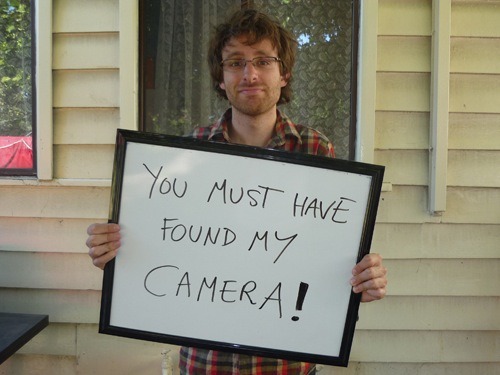
“ Most of us photographers have a few ‘worst nightmare scenarios’. One of them is losing our cameras. Andrew McDonald has a strategy just for you that will increase the chance of getting your camera back. He took the following series of images and...

Most of us photographers have a few ‘worst nightmare scenarios’. One of them is losing our cameras. Andrew McDonald has a strategy just for you that will increase the chance of getting your camera back. He took the following series of images and leaves them on his camera so that anyone who finds it and scrolls through his pictures will see them.

I should probably do that, too. Click the photo to see the whole series.

(via How to Get Your Camera Back When You Lose It)

5v3n:

filtercake:

“A nine-minute history of corporatism.”

Life Inc. The Movie (by Douglas Rushkoff)

OK, so “digital renaissance” was a bad catchphrase for my recent post. Apart from that sad insight - great thoughts on taylorism / scientific management & the resulting social disconnection.

5v3n.com: A Digital Renaissance?

Is programming our era’s equivalent of literacy?

5v3n:
“This - is - just - AWESOME!
thedailywhat:
“ Street Art of the Day: Spotted on Bergmannstraße in Berlin.
Dear all other fences: You are dead to me.
[spreeblick.]
” ”

5v3n:

This - is - just - AWESOME!

thedailywhat:

Street Art of the Day: Spotted on Bergmannstraße in Berlin.

Dear all other fences: You are dead to me.

[spreeblick.]

“Do me a favor, will you? Stop giving me the run around just like the rest of the world does. I am sick and tired of reaching for something, following all the directions, etc., etc., only to find out I can’t have it.”

From the saddest email I’ve received today.

It’s from an Internet Explorer user, frustrated that he couldn’t get Instapaper’s “Read Later” bookmarklet installed. (It’s incredibly clunky to do in IE, because IE doesn’t support the troops, poisons your children, and gives you cancer.)

It’s a sad look into the everyday browsing life of a user who, for whatever reason, is exclusively using Internet Explorer in 2010.

(via marco)

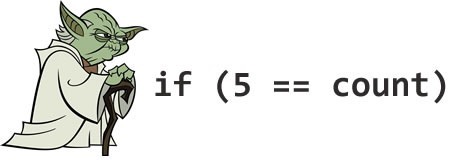
Yoda Conditions “ The act of using
if (constant == variable)
instead of
if (variable == constant)
It’s like saying “If blue is the sky” ”
Damn, that’s funny.
New Programming Jargon — Global Nerdy

Yoda Conditions

The act of using

if (constant == variable)

instead of

if (variable == constant)

It’s like saying “If blue is the sky”.

Damn, that’s funny.

New Programming Jargon — Global Nerdy

H.R. Giger's website FAQ

Look at the FAQs on H.R. Giger’s website. They are totally honest and straight forward; definitely not your usual ‘fake’ FAQs.
I particularly like this section (it is long, but totally worth it):

WHEN SHOULD FANS CONTACT GIGER’S AGENT?

Hardly ever. But fans being fans and not always prone to listening to reason, they will do whatever they want, regardless of the advice given here. That’s the nature of the Internet. So, if you believe you need an answer to a specific question not touched upon in this FAQ section, you can try to Email Les Barany and he will try to respond to you if he can.
If you have already written to him and did not receive a reply, it’s most likely because he has not gotten around to opening your mail, or because your question has already been dealt with here, or was too obvious, too ridiculous, or too vague. As you can imagine, he gets a lot of Email and has an only a limited amount of time for replies, which restricts his ability to reply to everyone. If you will write about something that is not directly related to Giger’s artwork, don’t be surprised if you do not receive an answer. If your letter catches Les’ interest, you may hear from him, eventually, sometimes many months later. Be prepared, it may not be the answer you expected.

Here is an example, for the enlightenment of everyone:

I’m an aspiring artist and a big fan of Mr. Giger’s work, and was wondering if you could possibly give me some advice? Any help you could give me would be greatly appreciated, particularly if you could guide me as to what courses you feel would be of most benefit to me.

Dear Aspiring Artist:

Here is my advice. Think of it as a five-year plan:

Take whatever courses you find the most interesting.

Study closely the work of the Old Masters.

Stop making art that originates only from your own imagination.

Stay with one technique until you perfect it.

On any given day, always be in the middle of reading a book. When you finish one, start the next. Fiction, nonfiction, biographies, autobiographies, history, science, psychology, or how to build a kite. Anything but go easy on the comic books.

Buy and read the first 6 pages of newspaper every day and also the editorial commentaries. Skip the entertainment section. Su Doku is fine. Do the crossword puzzle.

Fill up a sketchbook every month with pen or pencil drawings of the world around you, not from your imagination.

Buy a book on figure drawing. It’s the only art book you will ever need.

Until you can draw an accurate portrait of someone, you don’t know how to draw.

Stay away from the airbrush. You’ll never master it, hardly anyone ever has.

Visit every museum in your city. Often, until you have seen everything in it. Every kind of museum. Not only the art museums but, of course, those as well.

Forget about contemporary art by living artists, at least for the next few years.

Stay away from most art galleries. Go to art auctions. That’s where the real action is.

Learn to play chess.

Take a business course.

Talk to you mother or father at least once a week.

Stop going to the movies until you have rented and seen every film on this list. http://www.time.com/time/2005/100movies/the_complete_list.html

Do not watch television unless it’s the news or documentaries.

Do not use an Ipod.

No video games, either.

Learn a foreign language.

Learn to cook.

Spend 8 hours in a hospital emergency room.

Save up money so you can travel to a foreign country within the next five years.

Do not litter.

Avoid politically correct people.

Vote in every election or never dare to utter a political opinion. You are not entitled to one.

Buy a digital camera and take photos every day. If you see nothing interesting to photograph, you will never be a good artist. Keep only one photo of every ten you take. Delete the rest. It will force you to learn how to edit the garbage from your life, to make choices, to recognize what has real value and what is superficial.

Visit an old age home.

Listen to classical music and jazz. If you are unable to appreciate it at least as much as contemporary music, you lack the sensitivity to develop into an artist of any real depth.

Go to the ballet. Classical or Modern, it doesn’t matter. It will teach you to appreciate physical grace and the relationship between sound and movement.

Wake up every morning no later than 8 AM, regardless of what time you went to sleep.

Learn to play a musical instrument.

Learn to swim.

Keep your word.

Never explain your art. People who ask you to do so are idiots.

Never explain yourself. Better yet, never do anything that will, later, require you to explain yourself or to say you’re sorry.

Always use spell check.

Stop aspiring and start doing.

This will keep you very busy but it can’t be helped. In my opinion, this is how you might, possibly, have a shot at becoming a good artist.

Hope this helps,

Les Barany
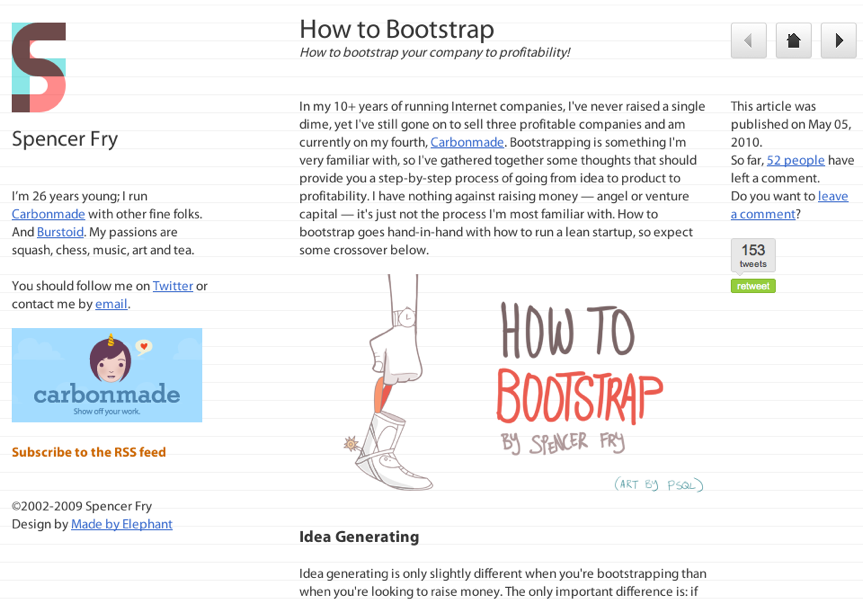
Look how nicely most of the elements align with the lines of the background image.
Cool idea.

Look how nicely most of the elements align with the lines of the background image.
Cool idea.