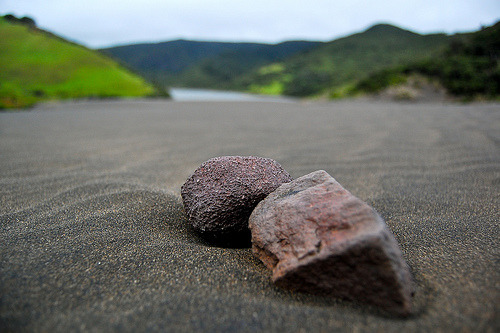
I like it when my pictures make it to Explore. :-)
I like it when my pictures make it to Explore. :-)
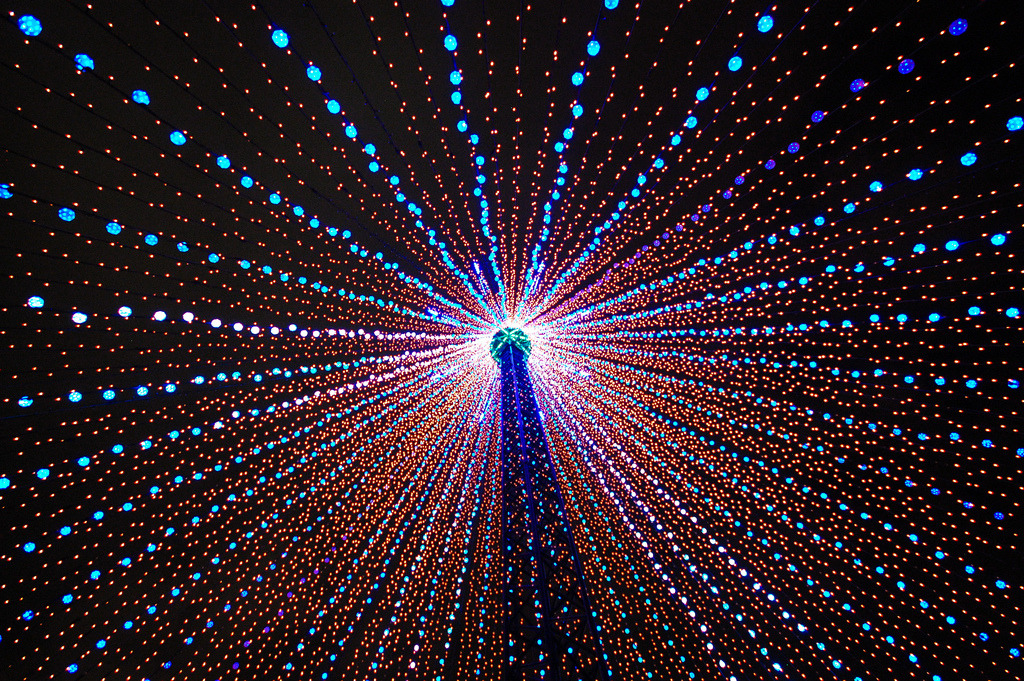
Surrounded by lights
One good example for what an extreme wide angle lens is good for!
Taken with my Nikon D40 and the Sigma 10-20mm lens @10mm. It’s inside a tree of lights.
A lens as wide as this gives you the ability to capture interesting views inside narrow interiors.
Shot from the hip, to get even more on the picture. (I wasn’t comfortable lying on the ground or setting up a tripod; it was too crowded under there.)
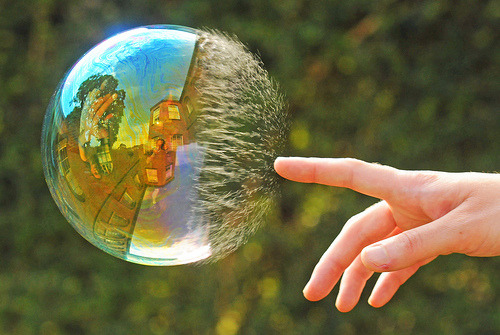
Bubble Pop: Reflection Perfection (via richard.heeks) (via Your Best Shot 2009: Bubbles)
I think this is approaching perfection, in terms of what I set out to capture. Maybe nail varnish would complete this. ;-) There’s something so satisfying about picturing something in your head and then finally seeing it on the camera!
The weather conditions this morning were absolutely perfect. There was absolutely no wind, the bubbles just hung in the air, and there was even cloud cover - like a giant diffuser created just for me.
The lighting of this shot is natural - sunlight through cloud. The Nikon D90 is great for giving clear images at high ISO (here ISO 800); making this shot possible.
N.B. This is a real photo of a soap bubble bursting. I’ve made slight edits to raise colour and light, but this is just to add some punch. This is not a Photoshop creation!
Stunning! Here’s the bigger version.
(1/500, f/5.6, ISO 800)
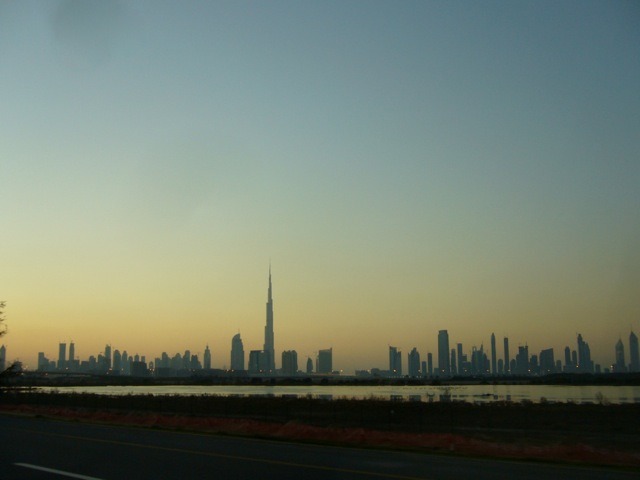
My mother just sent me this picture she took of the Dubai skyline.
Well done, Mom!
![Turning Torso (Malmö, Sweden) : Travellerspoint Travel Photography (Architect: Santiago Calatrava)
“ The tower’s design is based on a sculpture by Calatrava called Twisting Torso.[1] It uses nine segments of five-story pentagons that twist as it...](../.././64.media.tumblr.com/tumblr_kwbacgUudA1qa3r7do1_540.jpg)
Turning Torso (Malmö, Sweden) : Travellerspoint Travel Photography (Architect: Santiago Calatrava)
The tower’s design is based on a sculpture by Calatrava called Twisting Torso.[1] It uses nine segments of five-story pentagons that twist as it rises; the topmost segment is twisted ninety degrees clockwise with respect to the ground floor. Each floor consists of an irregular pentagonal shape rotating around the vertical core, which is supported by an exterior steel framework.
How great is that? I am impressed!
The extended take is, “an uninterrupted shot in a film which lasts much longer than the conventional editing pace either of the film itself or of films in general, usually lasting several minutes. It can be used for dramatic and narrative effect if done properly, and in moving shots is often accomplished through the use of a dolly or stedicam.”
The extended take is a cinematic hire-wire act that pushes the director, actors, cinematographer, art department, sound design, and every other department to their limits. They take a very long time to set-up, and are very easy to mess up. The longer the take, the more pressure is added to get it right.
Now I’m a little smarter and saw some truly amazing film scenes.
(via kottke)

Is there anything better to start into the weekend than a cold bottle of New Zealand’s best beer?
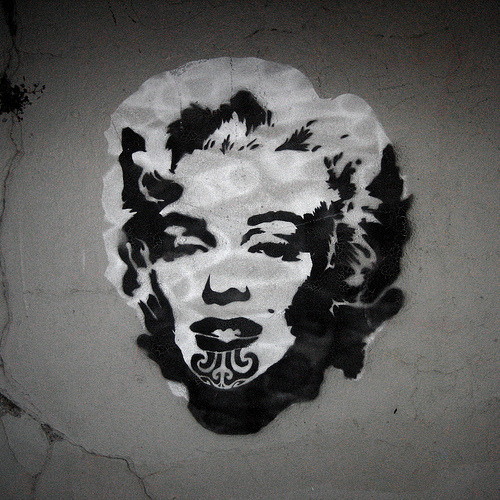
I found this graffiti on a wall somewhere in Auckland, after walking home from a concert. This was one of those moments where I was very glad of having my small Canon Ixus camera with me.
The graffiti shows Marilyn Monroe (obviously) with a Moko - Māori for “Tattoo” - on her chin.
digital-photography-school.com
In a nutshell, the D40 was affordable, weighs less than 500g and can make great photos. Build quality is better than you’d expect from an all-plastic body and a dinky 18-55mm kit lens
I love this camera. I’ve had it for two years now and I don’t plan to replace it anytime soon. I shot thousands of pictures and it is still as good as on day one - even heavy rain didn’t do harm.
Ok, I’d like to get a better high ISO performance, but this is pretty much the only thing. The 6 megapixels are definitely enough for me!
Read more: http://digital-photography-school.com/nikon-d40-modern-classic-review

37signals’ Rework arrived today. Can’t wait to read it.
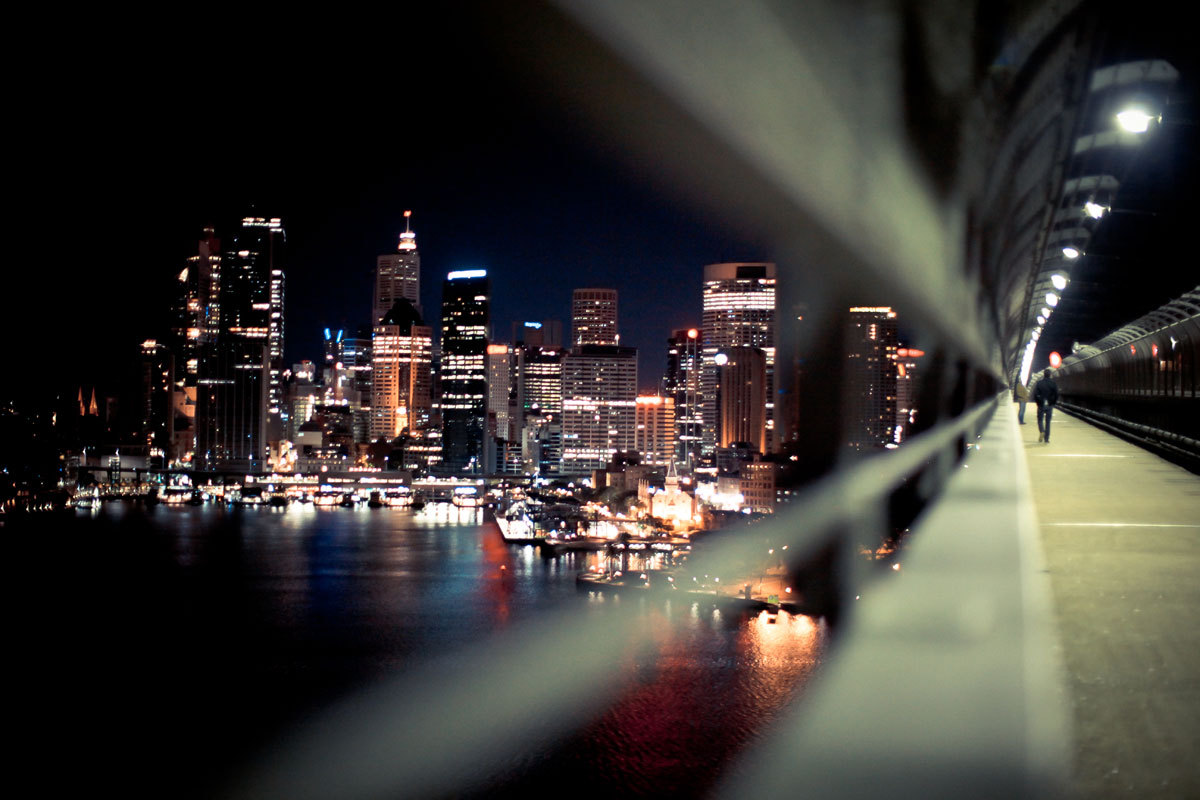
Syndey Harbor Bridge
That’s great! An awesome composition.
It would be even better if the 1st person was walking closer to the camera.
But what I really like, is that it reminds me, to have an eye for the not-so-obvious details. When you’re walking on Sydney’s Harbour Bridge, it’s easy to only see the Opera House.
He didn’t include it, and I love it!
I took a similar picture, but it really is a more obvious composition:

I learned about ‘Extended Takes’ a while ago, and yesterday I watched one movie from the list ’20 Greatest Extended Takes In Movie History’: Children of Men.
This movie contains a lot of these long scenes without cut. Two of those immediately got my attention. But first, here’s some context on what the movie is about:
Set in the United Kingdom of 2027, the film explores a grim world in which two decades of global human infertility have left humanity with less than a century to survive. Societal collapse, terrorism, and environmental destruction accompany the impending extinction. Meanwhile, the United Kingdom—perhaps the last functioning government—persecutes a seemingly endless wave of illegal immigrant refugees seeking sanctuary. In the midst of this chaos, Theo Faron (Clive Owen) must find safe transit for Kee (Claire-Hope Ashitey), a pregnant African “fugee” (refugee).
The first scene, I’d like to share is the 'roadside ambush’:
[Director Alfonso] Cuarón’s initial idea for maintaining continuity during the roadside ambush scene was dismissed by production experts as an “impossible shot to do”. Fresh from the visual effects-laden Harry Potter and the Prisoner of Azkaban, Cuarón suggested using computer-generated imagery to film the scene. [Cinematographer Emmanuel] Lubezki refused to allow it, reminding the director that they had intended to make a film akin to a “raw documentary”. Instead, a special camera rig invented by Gary Thieltges of Doggicam Systems was employed, allowing Cuarón to develop the scene as one extended shot. A vehicle was modified to enable seats to tilt and lower actors out of the way of the camera, and the windshield was designed to tilt out of the way to allow camera movement in and out through the front windscreen. A crew of four, including the DP and camera operator, rode on the roof.
So please note: these shots are without cuts!
Here is an article where you can see how the car looked like when they filmed the scene: Children of Men - Hard Core Seamless vfx.
Even longer is a scene “in which [main character] Theo is captured by the Fishes, escapes, and runs down a street and through a building in the middle of a raging battle”:
The creation of the single-shot sequences was a challenging, time-consuming process that sparked concerns from the studio. It took fourteen days to prepare for the single shot in which Clive Owen’s character searches a building under attack, and five hours for every time they wanted to reshoot it. In the middle of one shot, blood splattered onto the lens, and cinematographer Emmanuel Lubezki convinced the director to leave it in. According to Owen, “Right in the thick of it are me and the camera operator because we’re doing this very complicated, very specific dance which, when we come to shoot, we have to make feel completely random.”
Now watch this. It’s one take until the 6 minute mark.
That’s just amazing, even if you read that the final product doesn’t seem to be one single shot:
However, the commonly reported statement that the action scenes are continuous shots is not entirely true. Visual effects supervisor Frazer Churchill explains that the effects team had to “combine several takes to create impossibly long shots”.
All quotes taken from the Wikipedia article on 'Children of Men’.
Here’s a little making of the ‘Children of Men’ ambush scene.

Lake Harris from Conical Hill
I took this picture on the Routeburn Track (Mt. Aspiring/Fjordland National Parks) and it’s easily one of my favorites from this trip.
Fuck yeah. ;-)
“These little cameras are the future of digital. Big SLRs will still stick around for action, news, and sports, but for most of us, micro 4/3 is it. This kind of camera is half the size of old-fashioned mechanical DSLRs, with a complete range of interchangeable lenses.”– Ken Rockwell in his PMA 2010 Report