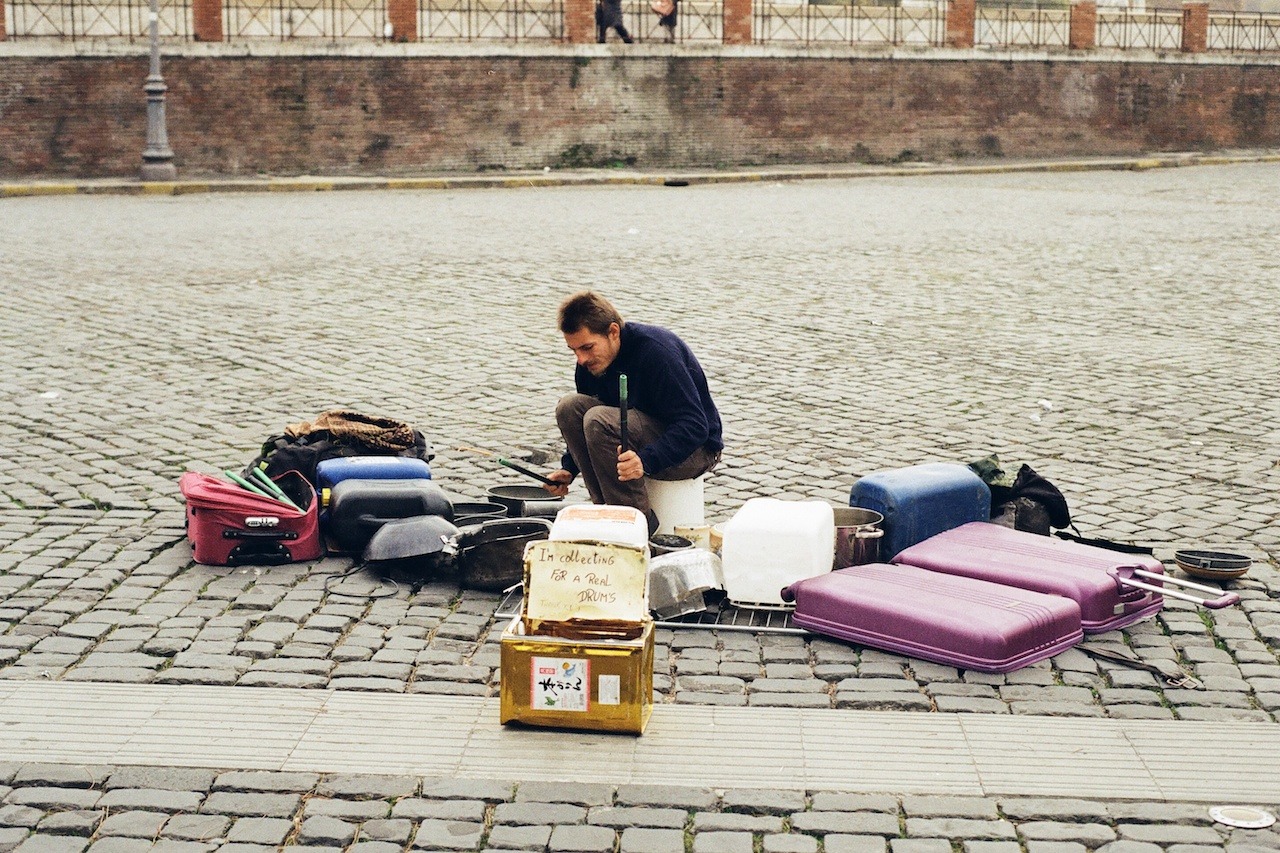
I’m collecting for a real drums
I’m collecting for a real drums

Aperitivo

Druid’s Rock
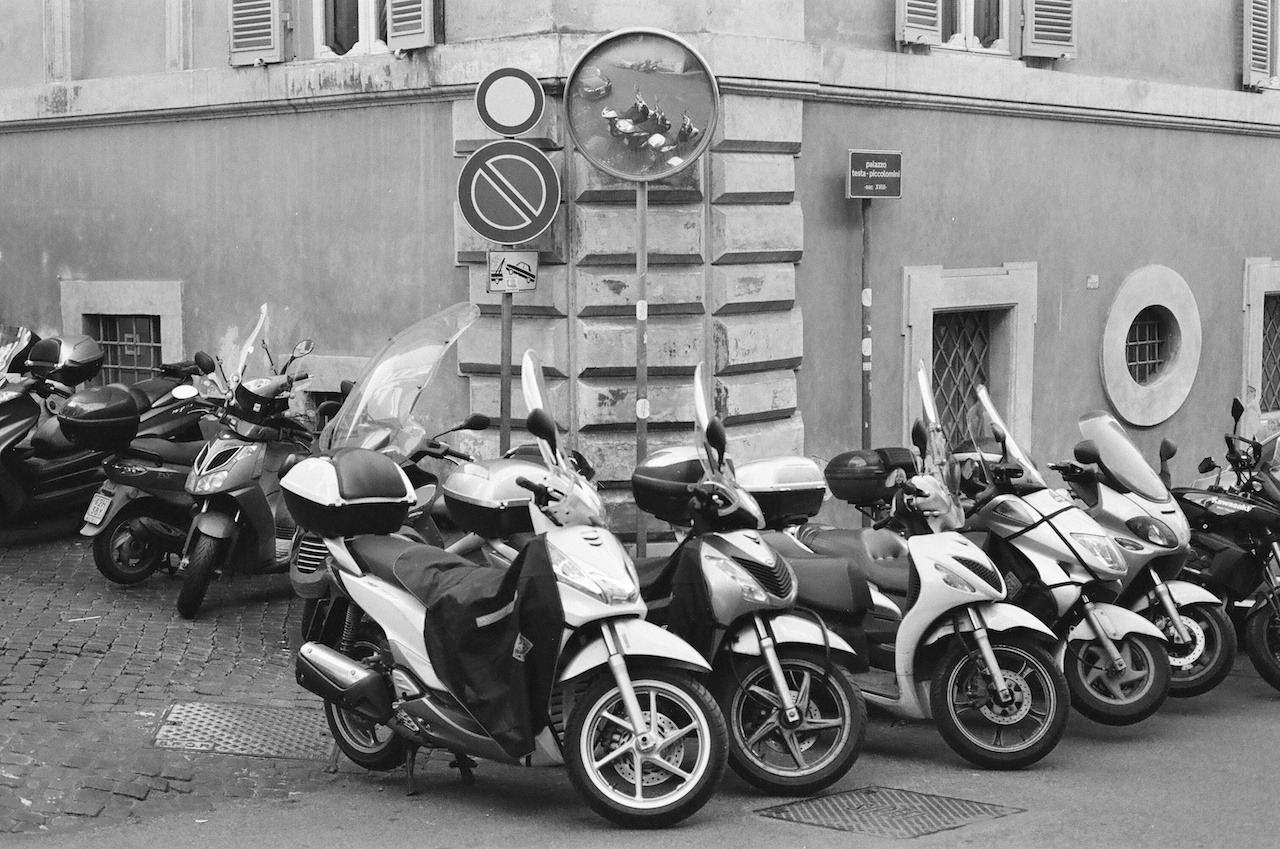
Scooters
Very soon, I’m going to stop forwarding this blog’s RSS feed to Feedburner.
Everything should just keep working. And if you’re subscribed, you should continue to receive updates. But if you don’t, you can visit blog.danielpietzsch.com and grab the feed’s link again from the bottom of the page.
After coming back from Rome, I had a problem. I enjoyed shooting with the Nikon FE film camera so much, that I wanted a digital camera that more closely replicates this experience than my GF1.
I wanted a more classic experience: an aperture ring on the lens, a shutter speed dial, a direct control for exposure compensation, a (optical) viewfinder, good manual focus. And more. And all of that in a compact package, not much larger than the GF1, if possible.
I didn’t have to look around much. There’s only one company right now that makes these sort of cameras: Fuji with its X-System.
So, I began reading articles and reviews about these cameras. Quickly, I got pretty excited about these cameras and couldn’t stop researching. DPreview and Thomas Menk’s blog were my starting points. And from there, I found an endless stream of articles and videos praising the Fuji cameras and their lenses.
After almost three weeks of obsession and hesitation, I ordered a new X100s via eBay last Friday.
While the X100s is apparently not perfect in all regards, it still ticks a lot of boxes for what I think makes a good camera for me: In addition to the classic controls, there’s the hybrid viewfinder, a great sensor with high dynamic range and low noise, a fast high-quality prime lens and it’s dead silent and small — to name a few.
I had some doubts getting a camera with a fixed 35mm-equivalent prime lens. But then again, the vast majority of photos I took with the GF1 in the last three years were with either the 28mm-equivalent or 40mm-equivalent primes. So I think this one lens will fit my shooting style quite well. For at least 95% of the time anyway.
I can’t wait to try it out.
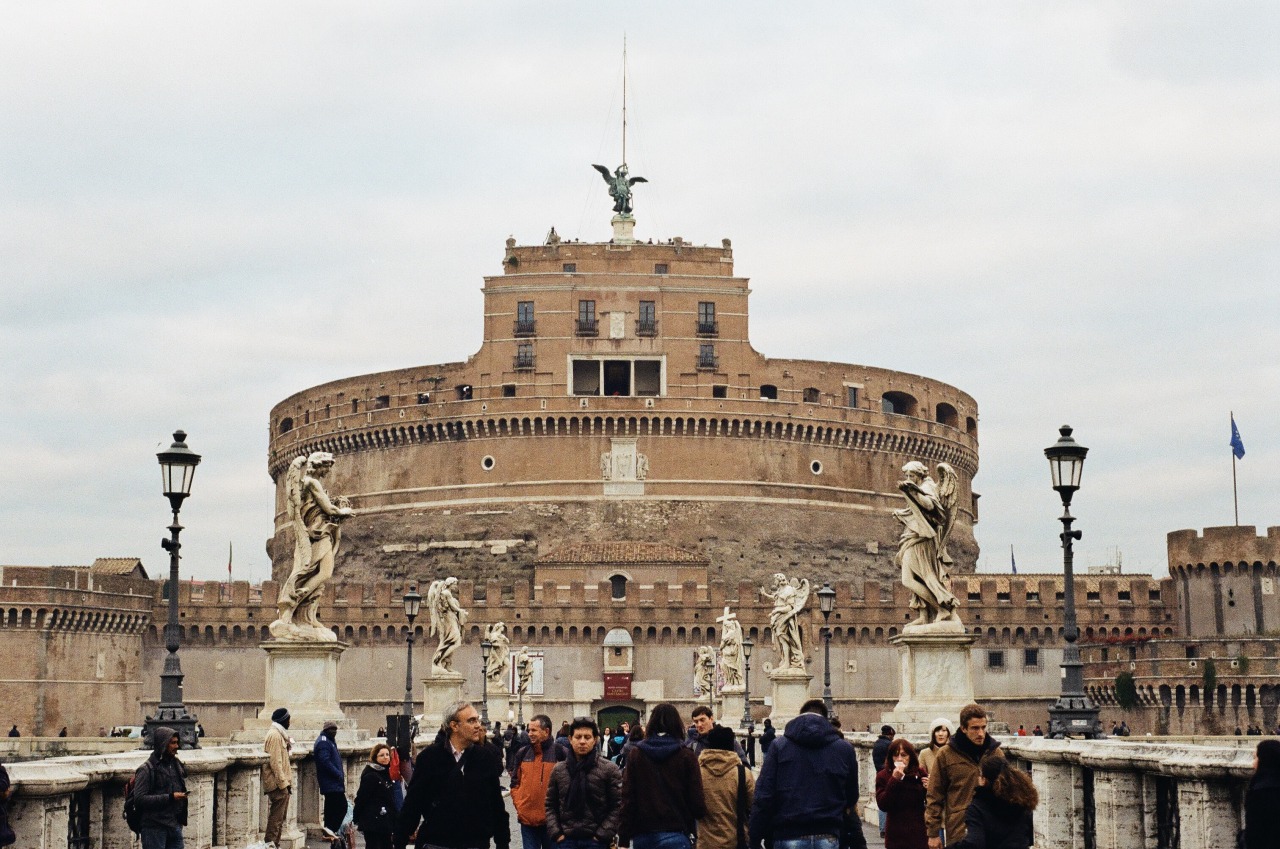
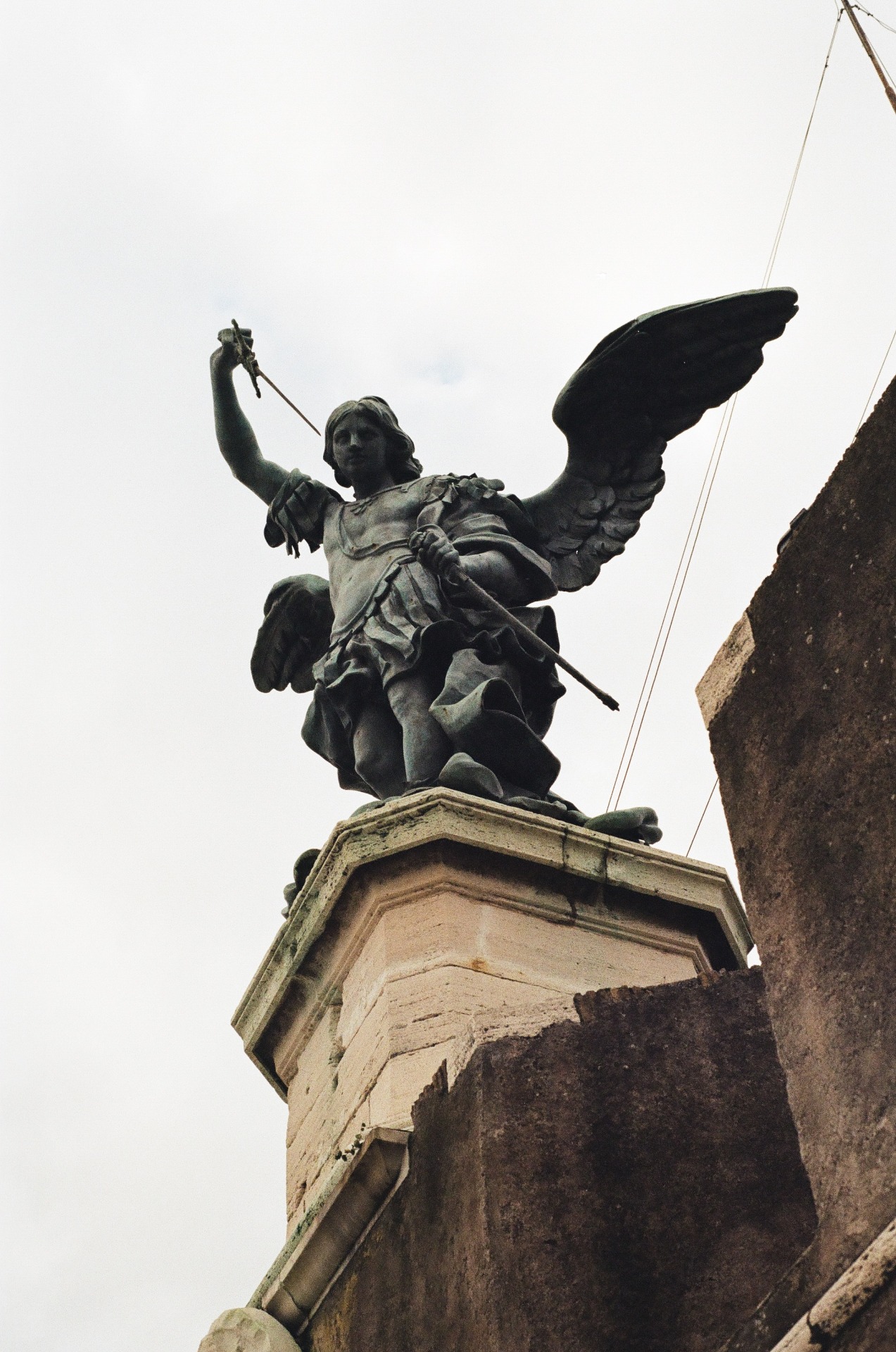
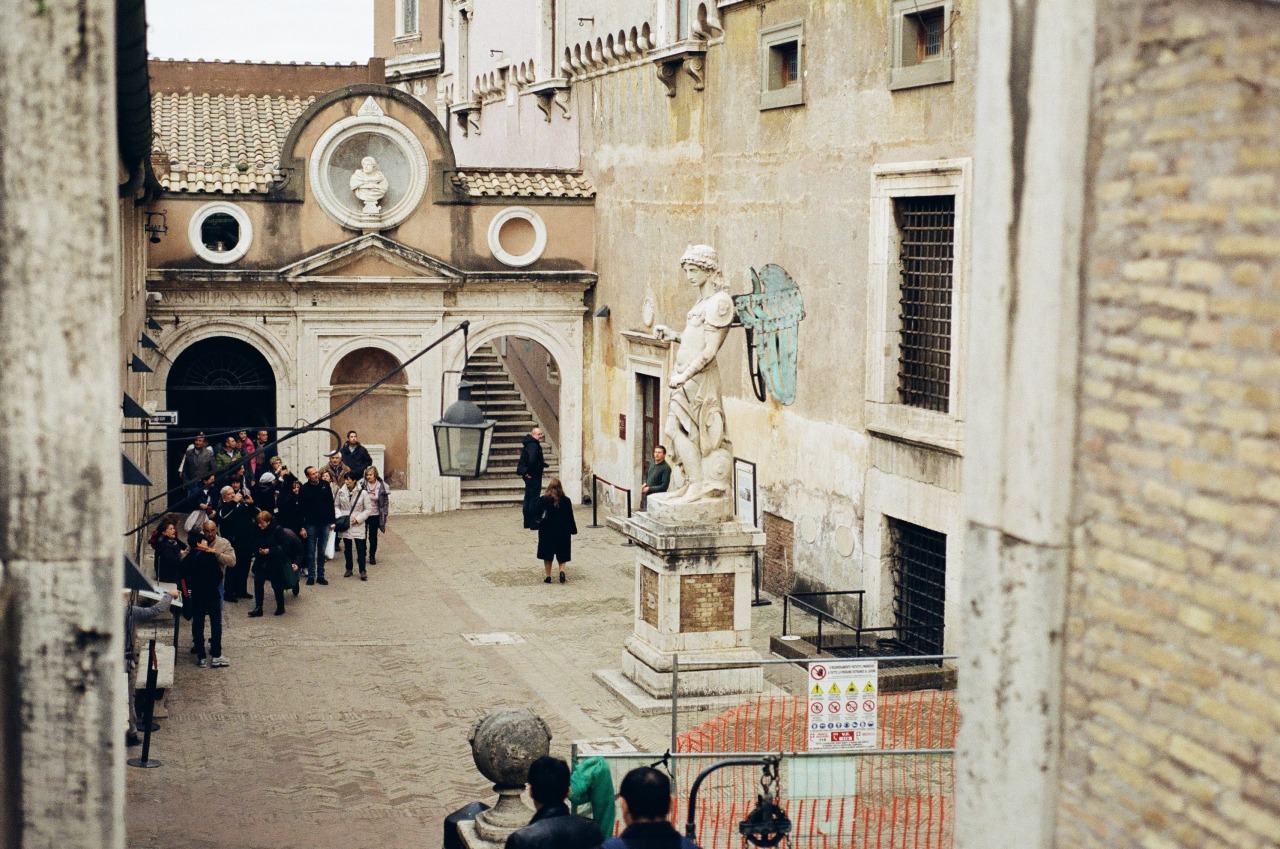
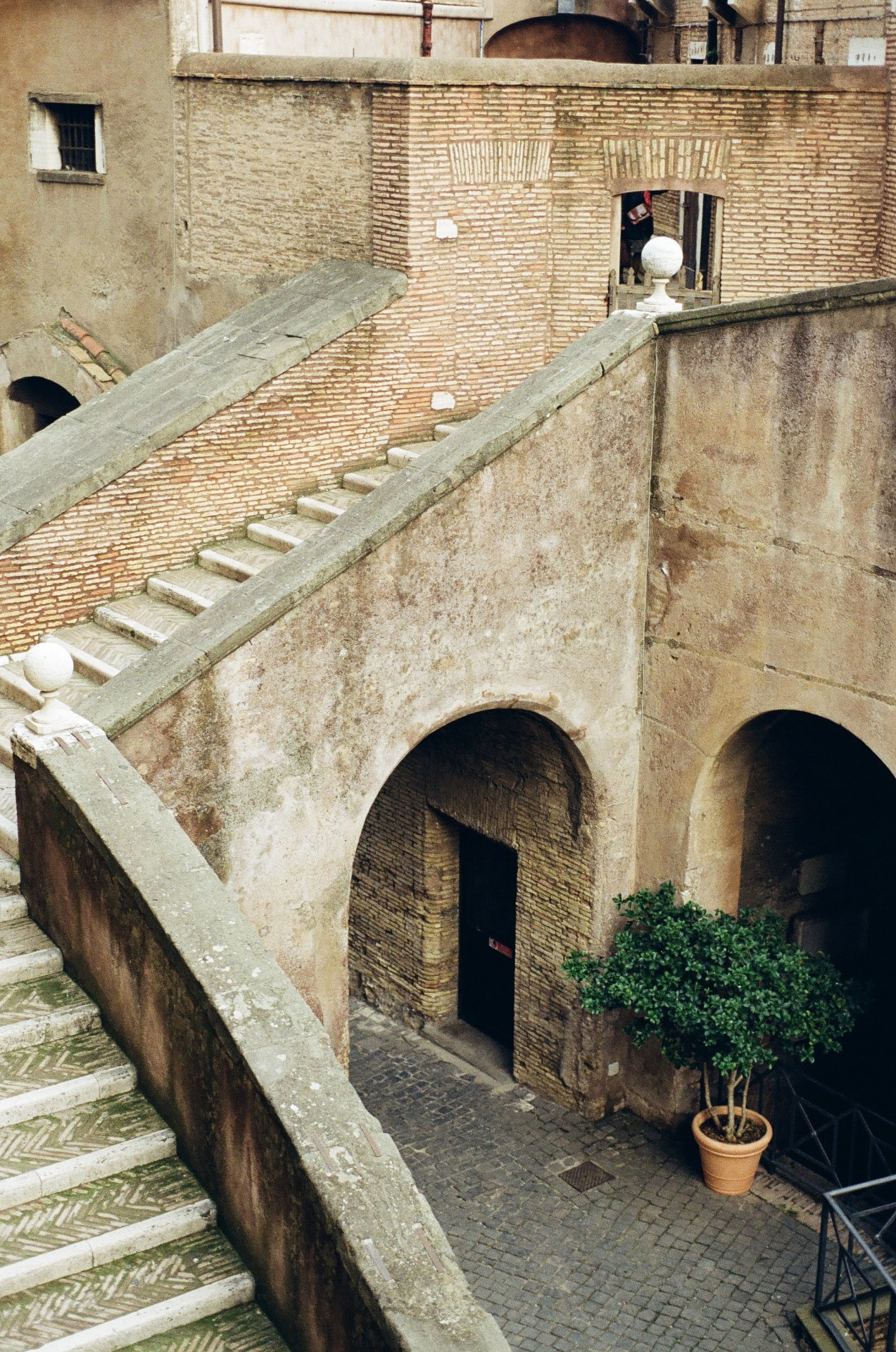
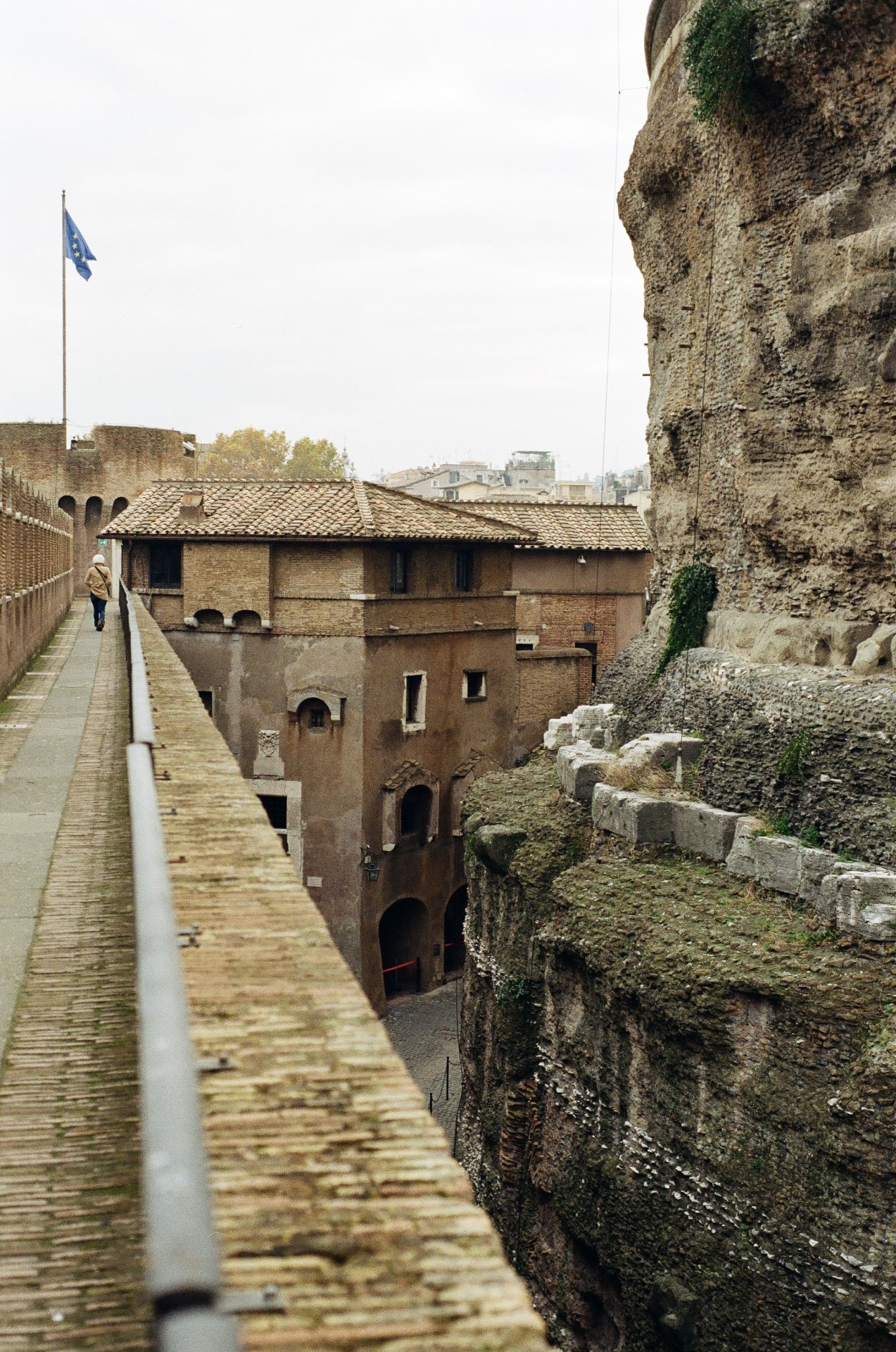
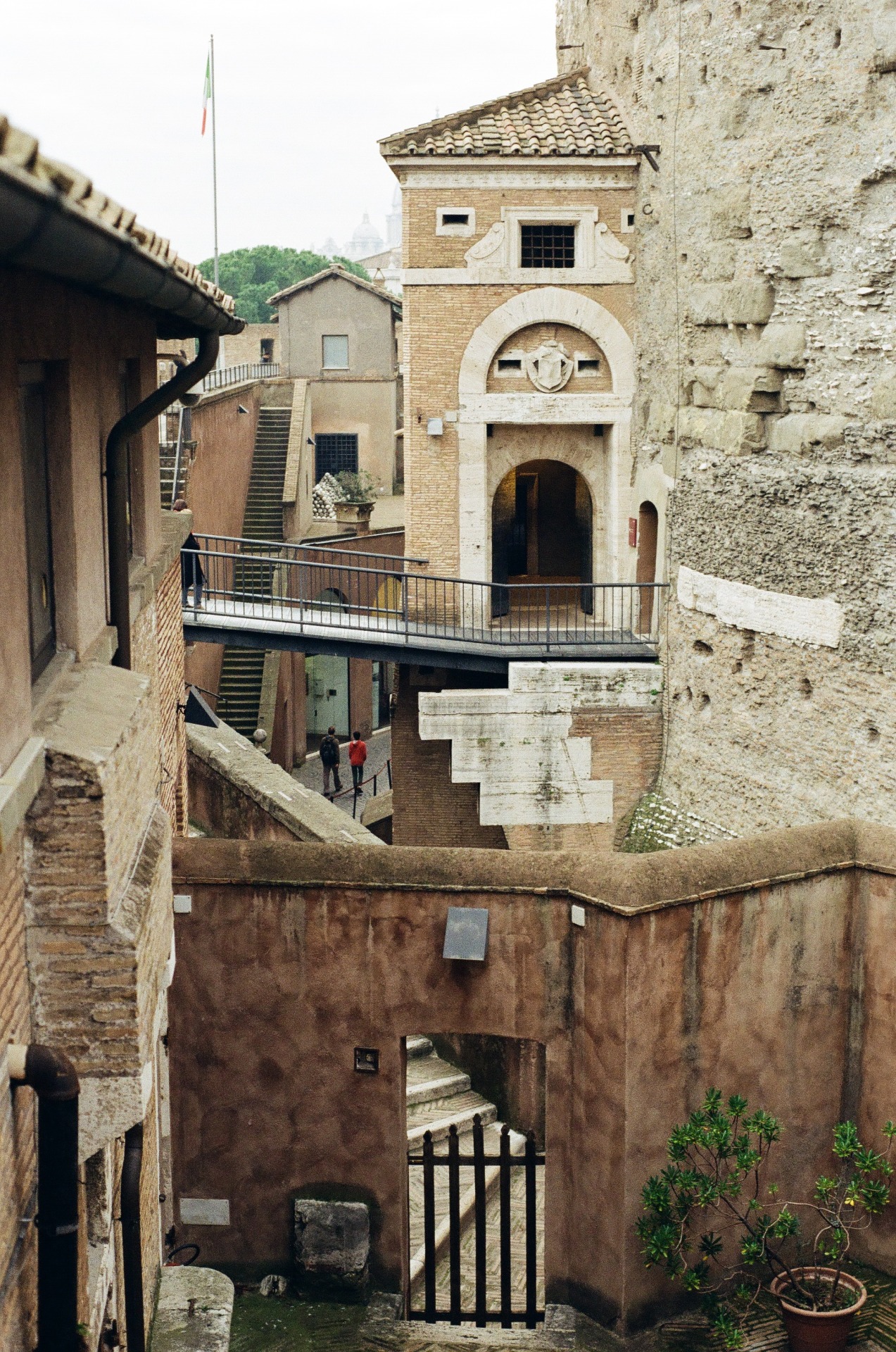
Castel Sant'Angelo, Rome.
Shot with a Nikon FE, 50mm lens and Kodak GB 200 Gold film.


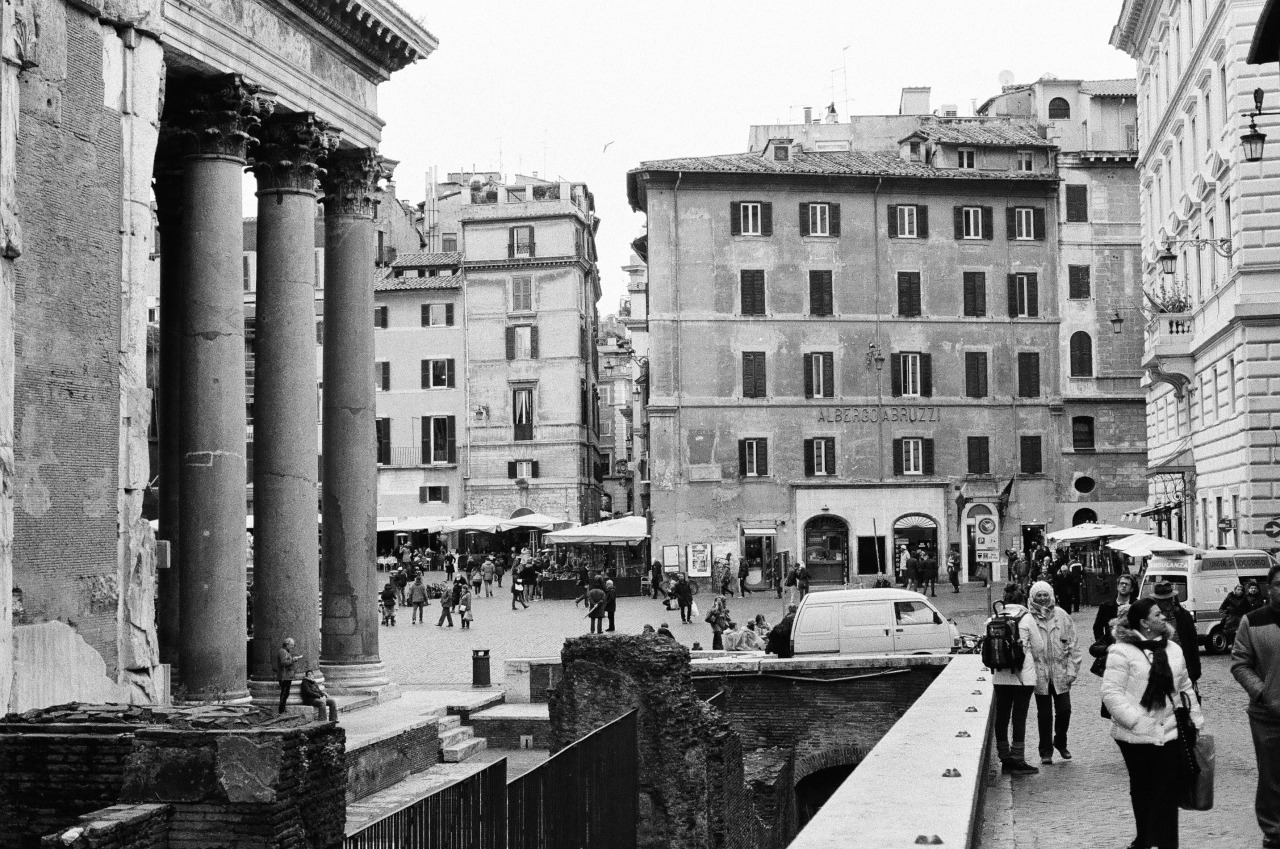
Around and inside the impressive, almost 2000 year old Pantheon in Rome.
All shot with a Nikon FE, 50mm lens and Fuji Neopan 400 film.





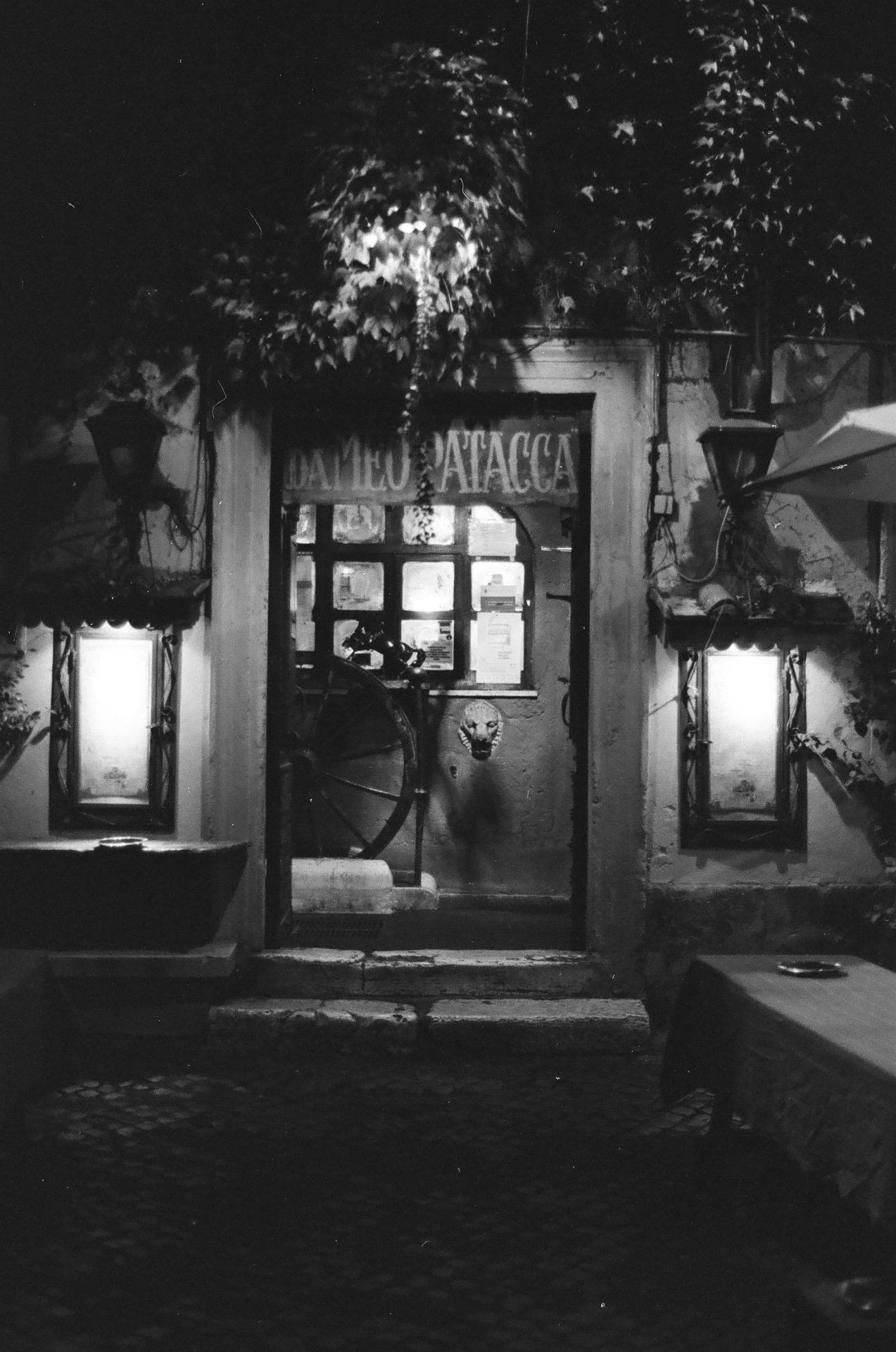
At the beginning of December, Nicole and I went to Rome for a week. I took with me my Nikon FE film camera with 50mm lens and two black and white films. And I had a blast shooting with it.

It was not the only photographic equipment I brought along, of course. I also packed my trusty GF1 plus a few prime lenses. And I still shot more photos with the digital equipment. But it was the 30-year-old, simple film camera that I enjoyed way more. I didn’t really expect this and ended up shooting more than I originally planned to. So I had to buy one more (colour) film while we were there.

Been here for lunch. This was our waiter.
When I was out with the Nikon, I didn’t bring my GF1 and vice versa.
What made me like this setup so much, was a combination of its controls, the limitation of a single lens, the fact that it is a film camera, and its overall simplicity.

The controls are just fantastic. Instead of a mode-dial, which almost all modern cameras have, it has an aperture ring on the lens as well as a focus ring, a shutter-speed dial and a direct control to set the exposure compensation. That’s it. You can look at the top of the camera and can immediately see what its settings are. And — more importantly — you can set all the controls directly without looking at a screen and fiddling with tiny buttons. I really wonder why almost all cameras these days have a mode-dial, especially with enthusiast and pro models. I think, it’s wonderfully intuitive to set your camera with these old-school controls. It’s all you need, really.

I learned to love a manual lens on my GF1. But the 50mm lens translates to a 100mm equivalent on Micro Four-Thirds, which just isn’t that practical for me most of the time.

Another thing I noticed was, that I really like looking through a viewfinder. I missed this with my GF1, but it was while shooting with the FE, that I noticed just how much. I don’t know exactly why, but it feels different than composing via a screen. When you lift the camera to your eye and look at the actual world through an optical viewfinder, there’s a different connection to the world around you.

The constraints of this setup — shooting film and having one specific film loaded at a time, plus having a single focal length lens — really made me think more about what to photograph and how to photograph it. I was way more careful with composition. And at the same time it was very liberating not having to think so much about the settings or what lens to use. That was the setup and I had to cope with it. There was more focus on shooting than anything else.

When I was back, it was quite exciting for me to wait for the results. Having only shot one film with the camera before, I wasn’t even confident that the three films I shot turned out ok at all. But they did. And they look quite different to digital — in a good way.

Apart from the photos showing the cameras, all the photos were taken with a Nikon FE with 50mm E Series lens and Fuji Neopan 400 (b&w), Kodak Tri-X 400 (b&w) or Kodak GB 200 Gold (colour) films. Apart from occasional cropping and/or straightening, these photos are not post-processed and are displayed how I got them from the photo-lab.

More photos to come…
Fantastic talk by Jeremy Keith: The Power Of Simplicity – border:none (by beyond tellerrand).
Too many good things to quote, but here’s one appetizer:
It’s not like the web is fixed by default and then we have to work it, making it responsive. The web is responsive by default, and as we start to add complexity – using CSS, using JavaScript – the actual trick is to not screw it up.
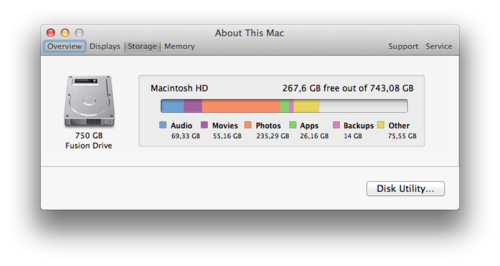
I went with option 1: installing a Samsung 250 GB EVO SSD in place of my existing 500 GB HDD and replacing the DVD-drive with the Hardwrk-Kit plus the 500 GB HDD.
Feedback from a few people helped me making the decision. All of them are running a similar setup — or pretty much the same even. All of them are very happy with it and haven’t had any problems.
Here’s what the storage allocation now looks like:
And here are the steps I’ve taken:
The disassembling and reassembling of the hardware turned out to be easy. The manuals are very detailed and the hardware is laid out pretty obviously anyway.
I’ve used the setup for a day now, and everything’s running smoothly and really fast. Happy, happy, joy, joy.
I’ve been using Firefox as my main browser for the last couple of months. And only now I discovered a feature called “Tab Groups”:
Tab Groups are an easy way to organize a lot of tabs. With Tab Groups, you can visually group related tabs, switch between groups and quickly search through all of your tabs.
If you’re a tab addict, regularly ending up with more tabs than fit on the Tab Strip, Tab Groups were made for you. They’re also great for grouping tabs by task and then switching between them.
That very much sounds like me. What a nice feature!